

By Fredson Bainomugisha.
President Yoweri Kaguta Museveni on May 17, 2026 postponed Uganda Martyrs’ Day celebrations over fears linked to the ongoing Ebola outbreak in Eastern Democratic Republic of Congo and confirmed cross-border cases in Uganda.
In a statement issued after consultations with the national epidemic response task force and religious leaders, Museveni said the decision was taken to protect pilgrims and the wider public from possible exposure to the deadly virus.
“After consultations with the national epidemic response task force and religious leaders, we have decided to postpone the Martyrs’ Day to a later date, which will be communicated,” Museveni said.
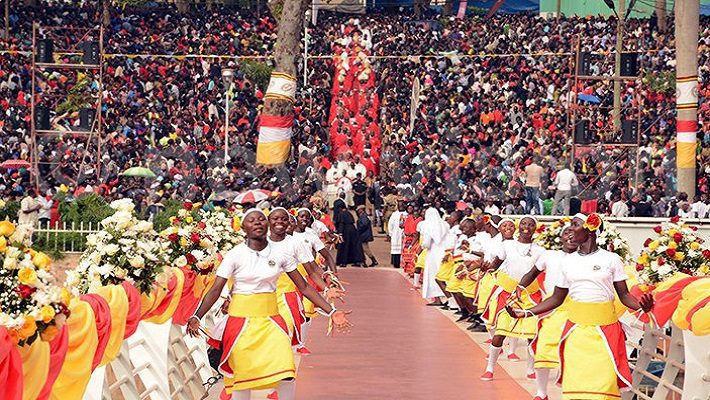
Uganda Martyrs’ Day, celebrated annually on June 3 at the Namugongo Catholic and Anglican shrines in Wakiso District, attracts millions of pilgrims from Uganda and neighbouring countries including the Democratic Republic of Congo, Kenya, Rwanda, Tanzania and South Sudan.
Government said the large number of pilgrims who travel from Eastern Congo every year raised concerns following the recent Ebola outbreak confirmed in Ituri Province in eastern DRC.
“This decision was made because Uganda receives thousands of pilgrims annually from Eastern Congo, which is currently experiencing an Ebola outbreak,” Museveni noted.
According to the World Health Organization, the Ebola outbreak caused by the Bundibugyo strain has already resulted in dozens of deaths and hundreds of suspected infections in eastern DRC, with imported cases also confirmed in Uganda.
WHO on May 16 declared the outbreak a Public Health Emergency of International Concern following fears of wider regional spread due to cross-border movement between Uganda and DRC.
Uganda’s Ministry of Health previously confirmed two imported Ebola cases in Kampala linked to travel from DRC, although health officials said no widespread local transmission had been established by the time of the announcement.
Museveni urged pilgrims who had already started travelling to immediately return home and continue following preventive health guidelines issued by authorities.
“I encourage those who had begun their journey to return home, continue observing the precautionary measures, report anyone who is sick, and encourage those who are ill to seek medical care,” he said.
The President acknowledged that postponing the religious celebrations could inconvenience pilgrims and organisers but insisted public safety must remain the top priority.
“We regret any inconvenience caused, but the protection of life must come first,” Museveni added.
The postponement marks one of the rarest disruptions to Uganda Martyrs’ Day celebrations, one of the country’s biggest religious events commemorating the 45 Christian converts killed between 1885 and 1887 under Kabaka Mwanga II of Buganda Kingdom.
Authorities have since intensified screening, surveillance, and public health awareness campaigns at border points and major gathering areas as Uganda moves to prevent a possible spread of the virus while safeguarding public events and religious activities across the country.
