


Hustle culture was supposed to inspire young people. Instead, it’s slowly exhausting them.
Everywhere you look online, the message is the same: work harder, sleep less, grind nonstop. If you’re not busy, you’re falling behind. If you’re resting, you’re wasting time. For many young people today, hustling is no longer a choice, it’s an expectation.
Social media has turned hard work into a performance. Timelines are filled with early-morning routines, endless side hustles, and overnight success stories. What we don’t see are the long nights, the anxiety, or the burnout that comes with constantly trying to “make it.”
The pressure is real. Rising living costs, limited opportunities, and unstable incomes mean young people feel they must do more just to survive. One job isn’t enough. One dream isn’t enough. Everything has to be monetized. Passion projects slowly turn into unpaid labour, and hobbies become stressful obligations.
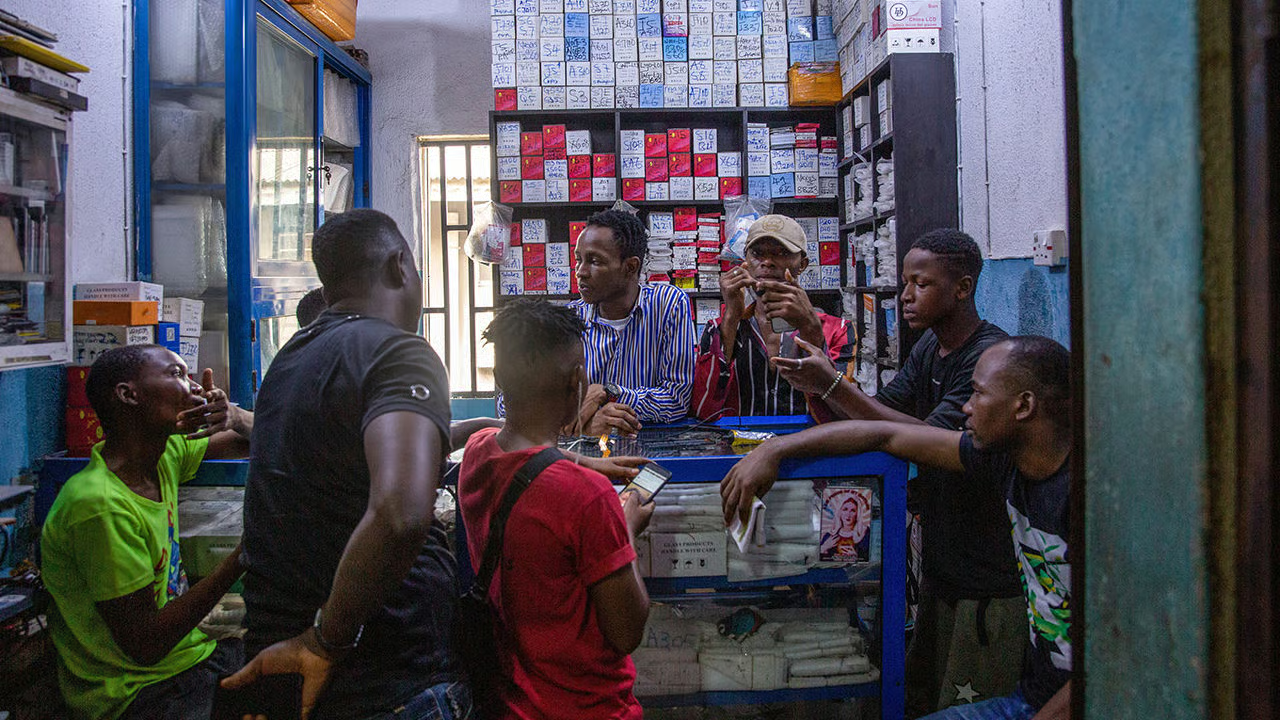
What makes hustle culture dangerous isn’t hard work itself, it’s the guilt attached to rest. Taking a break feels like failure. Saying “I’m tired” feels like weakness. Yet exhaustion has become the default setting for a generation trying to build a future in an uncertain world.
More young people are starting to question the grind. They’re choosing balance over burnout, consistency over chaos, and growth that doesn’t cost their peace. The conversation is shifting from “work until you drop” to “work smart and live well.”
Hustling should build lives, not break them. Ambition is healthy but when working hard becomes too much, something has to change.
